The Game Reviews Crisis: AI Fakes, Influencer Economics, and Why Nobody Knows What to Trust Anymore
Game reviews are a mess


Last month, Metacritic removed a Resident Evil Requiem review because it was written by a fake AI journalist who doesn't exist.
The "author," Brian Merrygold, had an AI-generated profile picture (the filename was literally ChatGPT-Image-Oct-20-2025-11_57_34-AM.png), zero online history, and produced a review full of vague clichés that could've applied to any horror game ever made. The outlet, VideoGamer, had apparently gutted its human staff and replaced them with AI-generated content farms pumping out casino affiliate slop.

VideoGamer has since been de-indexed from Google entirely. A legacy UK games site, killed by algorithmic greed.
This isn't an isolated incident. It's a symptom of something deeply broken in how we evaluate games in 2026.
The Trust Collapse
Here's the uncomfortable reality: 26% of consumers don't trust influencer marketing at all. That's more than double the 11% who distrust traditional advertising. And in gaming specifically, the skepticism runs even deeper because gamers have been burned so many times.
We've all seen it. The streamer who's clearly reading a script. The YouTuber who gives every sponsored game an 8/10. The "review" that's suspiciously vague about gameplay because the creator only played for two hours during a paid preview event.
The numbers tell the story. According to the 2026 Influencer Marketing Benchmark Report, fake engagement and authenticity issues account for 12.73% of marketers' top challenges. Over 50% of marketers spend only 30 minutes or less vetting a single influencer before partnering with them. Only 25.6% consistently receive documentation on influencer vetting.
That's not due diligence. That's throwing money at a wall and hoping some of it sticks.
The Economics of Bullshit
Let me be clear about something: influencer marketing works. 58% of consumers have purchased products because of an influencer endorsement. 44% of Twitch viewers have bought something their favorite streamer recommended. The gaming influencer marketing industry hit $4.6 billion in 2025.
The problem isn't that influencer marketing exists. The problem is that the incentives are completely misaligned with honest evaluation.
Rising creator costs are the top challenge for marketing teams at 35.4%. When you combine that with budget constraints, economic pressure represents over 40% of reported challenges in the industry. Studios are getting squeezed, so they cut corners. They partner with whoever will take the deal. They prioritize reach over authenticity.
The result? Gaming marketing campaigns that fail consistently share common characteristics: influencer mismatches where streamers promote games outside their genre expertise, obvious script reading that breaks organic entertainment flow, and insufficient gameplay integration where promotional elements feel tacked on rather than natural.
Gamers can smell inauthenticity from a mile away. They have, in the words of one industry report, "highly sensitive bullshit detectors that traditional marketing professionals consistently underestimate."
The AI Invasion
The VideoGamer situation is just the tip of the iceberg.
A Copyleaks study found that AI-generated reviews are actively "overrunning Steam." We're not talking about the obvious bot accounts with one game and a one-sentence review. We're talking about sophisticated, human-passing content designed to manipulate aggregate scores.
Metacritic's response was unambiguous. Co-founder Marc Doyle stated: "Metacritic's policy is to never include an AI-generated critic review on Metacritic and if we discover that one has been posted, we'll remove it immediately and sever ties with that publication indefinitely pending a thorough investigation."
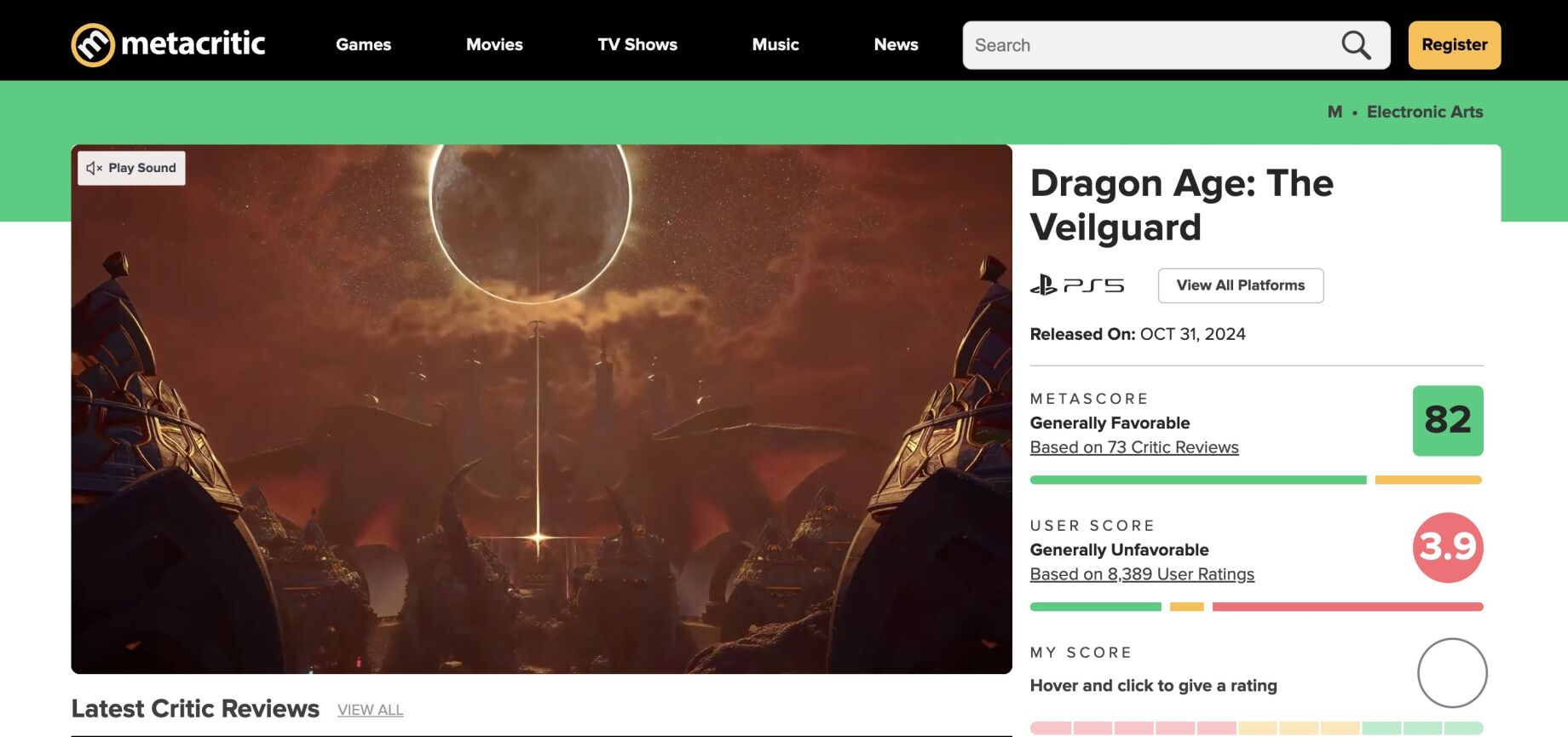
That's the right move. But it's also playing whack-a-mole against a flood.
A study from late 2025 found that over 50% of all new content on the internet is now AI-generated. Gaming content is almost certainly at the forefront of this because it's high-traffic, high-interest, and the content production costs have been ground down over years of "content farm" economics.
The former editor-in-chief of VideoGamer put it bluntly on Bluesky: "While I was in charge of gaming content there was no AI on the gaming side. I made it clear to my boss that I would rather resign than publish anything like that."
She left. The AI came anyway.
The Steam Problem
Steam user reviews were supposed to be the antidote to all this. Only people who actually bought the game can review it. Play time is displayed. You can check reviewer profiles. No single voice is louder than another.
But the system is breaking down.
Fake review farms exist. Unknown organizations are paid to write positive reviews from accounts with a handful of games and mostly free-to-play titles. The reviews are usually one sentence or a few words. And then there are the useless reviews—jokes, memes, catchphrases from the game—that provide zero useful information.
More concerning: the 2026 GDC State of the Game Industry Report found that 52% of game professionals now view generative AI negatively, up from 30% in 2025. Meanwhile, Quantic Foundry research shows 85% of gamers hold negative attitudes toward AI in games.
The industry knows there's a problem. Players know there's a problem. And yet AI-generated content keeps proliferating because the economics reward quantity over quality.
According to analysis, over 7,000 Steam titles disclosed AI use in 2025, representing roughly one-third of all releases. That number is projected to grow to one-third of all releases in 2026. The term being used is "gameslop"—low-effort titles assembled primarily through AI tools with minimal human curation, designed to extract a few dollars before players realize they've been had.
Cloud Gaming Changes the Equation (Sort Of)
There's a silver lining in all this, and it comes from an unexpected place: cloud gaming.
https://unsplash.com/photos/black-xbox-game-controller-on-black-surface-bPYn3VobzXs
Xbox Cloud Gaming usage grew 140% year-over-year. Over 70% of Game Pass subscribers now access content across multiple device types. The subscription model means players can try games without the $70 commitment that used to be the barrier to entry.
Why does this matter for reviews? Because when you can just try a game yourself through a subscription, the stakes of trusting a bad review drop significantly. You're not out seventy bucks if the game sucks. You just close the app and move on.
Cloud gaming won't solve the trust crisis on its own. But it changes the calculus. When access is cheap and instant, reviews become less about "should I buy this" and more about "is this worth my time." That's a fundamentally different question, and it requires fundamentally different evaluation criteria.
The gaming industry reached $522 billion in 2025 with over 3 billion active players worldwide. That scale creates opportunities, but it also creates a noise problem. How do you find what's worth playing when thousands of games launch every month?
The answer used to be "trust the reviewers." But the reviewers are increasingly either paid promoters, AI-generated fakes, or overwhelmed outlets trying to cover too much with too few resources.
What Actually Works
Here's what I've learned to look for when trying to evaluate a game in 2026:
Long-form, unsponsored content. Streamers playing games they weren't paid to play, for hours at a time, talking candidly about what works and what doesn't. You can't fake genuine enthusiasm (or genuine boredom) over a six-hour stream.
Second-week impressions. The reviews that come out on day one are often based on preview builds, limited playtime, and embargo pressure. The reviews that matter are the ones from players who've finished the game, hit the endgame, and encountered the bugs that only show up after 20 hours.
Community consensus over time. Steam's "Recent Reviews" filter is more useful than the overall score because it captures how players feel about the game right now, post-patches, post-content updates, post-honeymoon period.
Creators with clear genre expertise. An RPG creator reviewing an RPG is more useful than a variety streamer reviewing everything. Niche expertise matters.
Healthy skepticism of everything. If a review sounds too polished, too vague, or too enthusiastic without specifics, trust your gut. The worst reviews read like marketing copy because they often are.
The Path Forward
I don't think we're going back to some golden age of trustworthy reviews. That era was smaller, slower, and economically unsustainable. What we're building now is messier but potentially more robust: a distributed trust network where no single source has authority, but patterns emerge from multiple independent voices.
The AI problem will get worse before it gets better. Detection tools will improve, but so will generation capabilities. The arms race is real.
What gives me hope is that gamers are genuinely resistant to bullshit. The VideoGamer debacle wasn't exposed by sophisticated AI detection—it was exposed by regular readers who noticed something was off. The backlash against obvious influencer marketing is so strong that long-term brand partnerships now generate three times higher engagement than one-off sponsorships, because audiences can tell when someone actually likes what they're promoting.
Trust isn't dead. It's just harder to earn.
And maybe that's not entirely bad. Maybe we needed to lose our naive faith in professional critics to develop better individual judgment. Maybe the chaos forces us to engage more critically with the media we consume.
Or maybe I'm being optimistic because the alternative is admitting that the information ecosystem is broken beyond repair.
Either way, I'm going to keep reading reviews, watching streams, checking Steam scores, and triangulating toward something resembling truth. It's exhausting. It shouldn't be this hard.
But until someone builds something better, it's what we've got.
Sources:
- Metacritic Removes Resident Evil 9 Review From Fake AI Writer – Kotaku
- Influencer Marketing Benchmark Report 2026
- FAQ on esports: What marketers need to know – EMARKETER
- Fake, AI-Generated Game Reviews Are Overrunning Steam – 80 Level
- Year In Review: AI in Gaming Will Only Get Worse in 2026 – Insider Gaming
- This Long-Running Website Has Been Nuked From Google Thanks To AI – Time Extension
- AI Generated Game: The Complete 2026 Guide – Jenova AI
- Cloud Gaming vs Console Gaming in 2026 – TechTimes